
Imagining a Unified Student Digital Reading Experience
How I Utilized Qualitative User Research to Inform Future-Facing Design Concepts for an Edtech Company
About
My client was an Edtech company that supplies print and digital learning materials for K-12 classrooms.
Challenge
I was tasked with rapidly designing mockups to visualize our ideal “North Star” for a digital library and eReader user interface and experience based on research findings.
Impact
While delayed project roadmaps prevented the full development of the “North Star” digital reading experience I designed, smaller improvements to existing products were implemented as a result of this project.
My Role
UI Design
Team
Solo designer (me), 1 UX researcher, 1 product manager, internal stakeholders
Timeline
2 months
Overview
✅ Results
I delivered a “North Star” prototype for an ideal digital library and eReader experience based on research findings to product teams, which is being used as a resource for future feature and product improvement planning.
📈 Impact
Teams decided to migrate content, consolidating three digital eReader platforms to two, ultimately reducing codebase maintenance by 33%.
Multiple smaller improvements to the existing digital eReader platforms were released, including enhancements to text-to-speech functionality, icon usage, and the search experience.
Design Process
🔍 Analysis of Current Experiences
I started by mapping out the primary user flows for the three existing digital libraries and eReaders that my client was offering at the time.
🕵🏻♀️ Competitive Analysis
To gain insights and inspiration, I analyzed the reading experiences on competitor platforms. The areas of exploration I focused on were:
Onboarding experiences, if applicable
Digital library interface and navigation
Digital eReader interface and text tools (such as annotation features)
Any standout features that were unique to that product
Overview of competitive analysis gallery in Airtable
🫱🏼🫲🏻 User Research Synthesis
Partnering with the user researcher on the team, I synthesized extensive feedback from teachers and students. This helped me to identify:
Pain points such as difficulty finding books, inconsistent navigation, and a lack of student progress tracking.
Feature requests like advanced search filters, personalized book recommendations, and enhanced annotation tools.
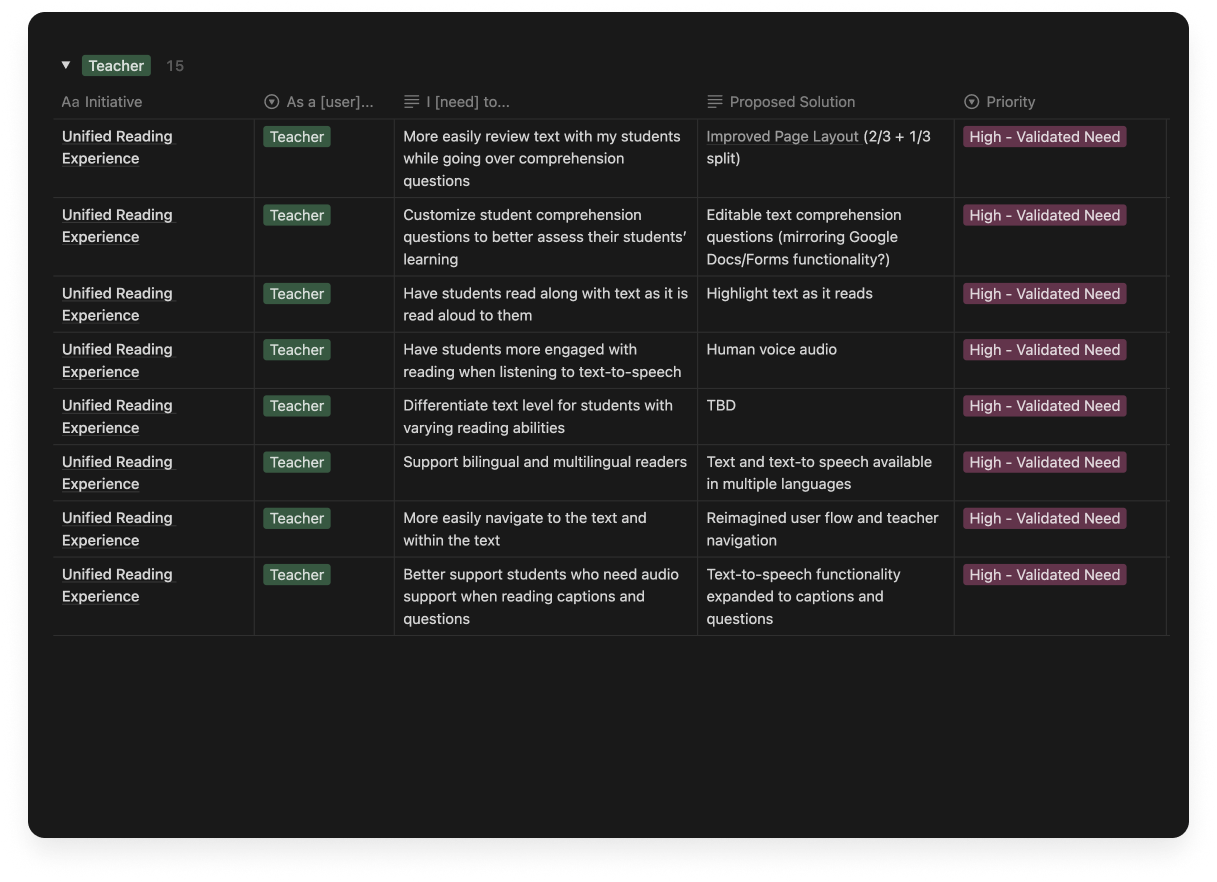
Teacher Needs
The most common request among teachers was for an enhanced text-to-speech experience, as this functionality is critical for supporting students who struggle with reading.
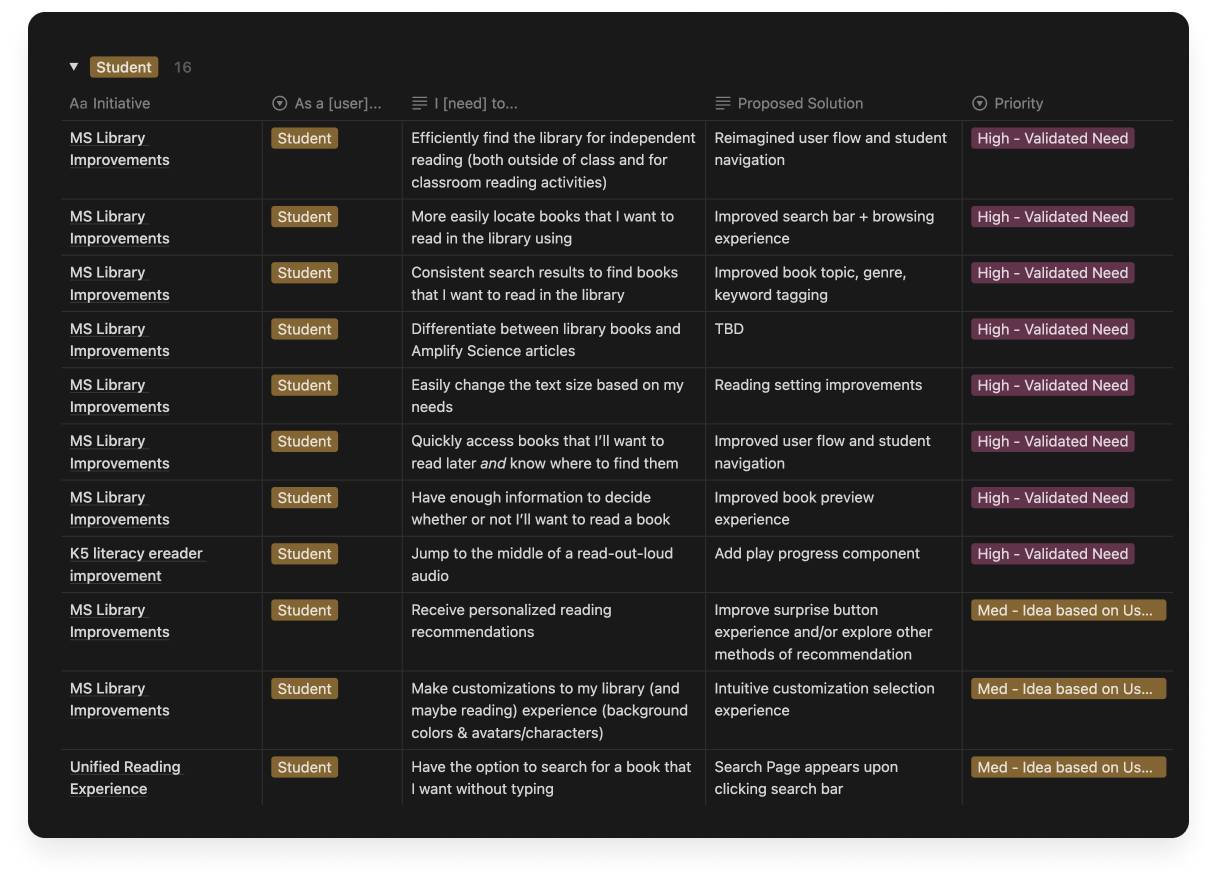
Student Needs
Students also requested an improved text-to-speech experience, as this is a preferred reading method for many.
Customized book interest recommendations were among the top requests from students.
Students wanted an easier way to preview books before deciding whether to read.
✏️ Translating Research Insights into Visual Concepts
To mock up feature requests that emerged during user research, I used low-fidelity wireframes to communicate ideas to stakeholders.
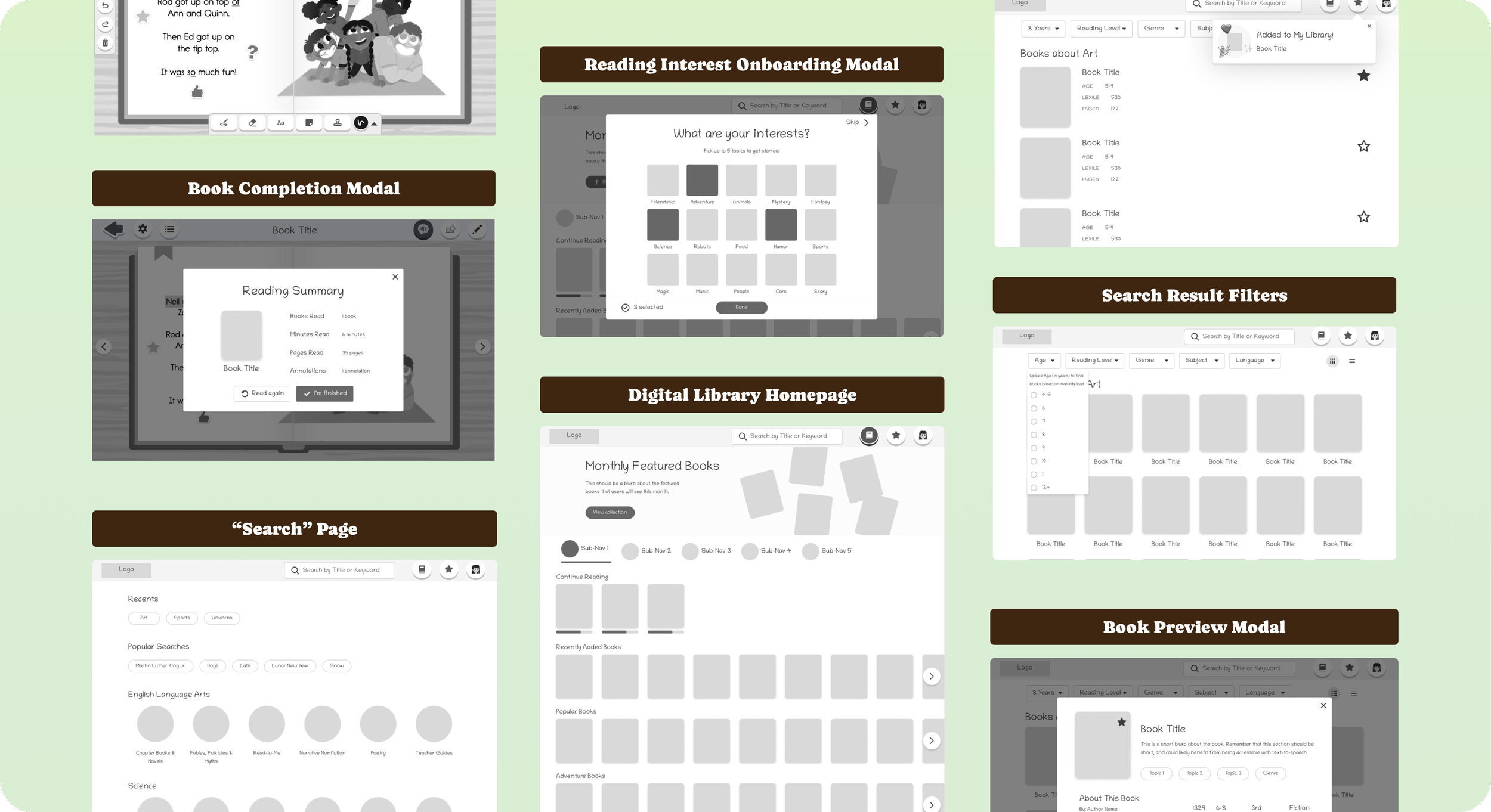
🖼️ Top Feature Requests
To finish up the project, I created high-fidelity mockups of the most requested features. They served as a tool for stakeholder socialization and a framework for gathering requirements from the product and engineering teams.
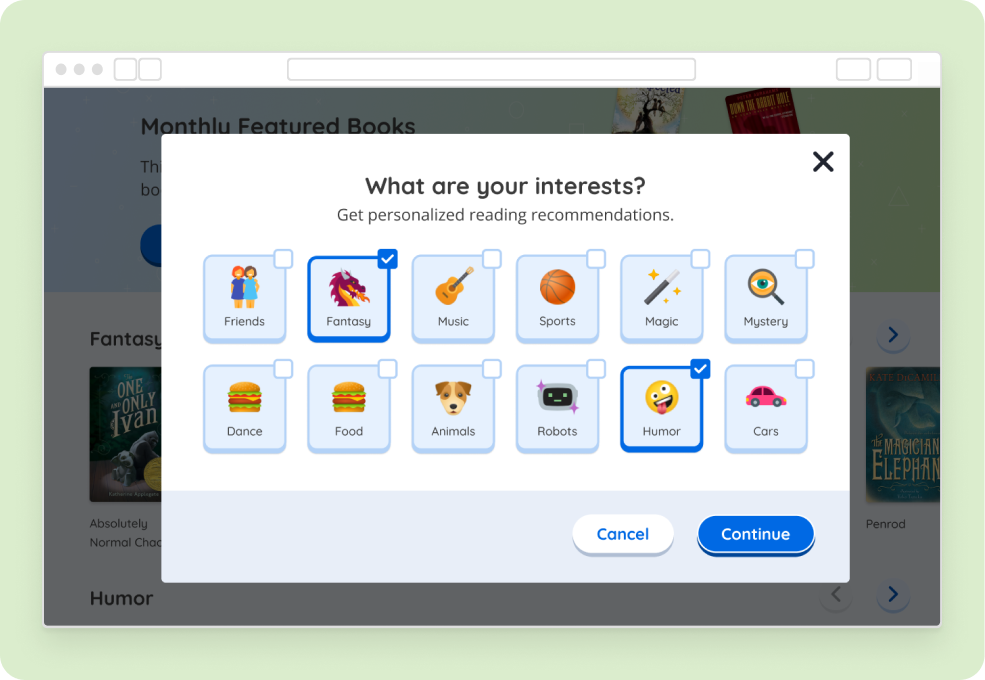
Personalized Reading Interest Curation
Research has shown that students want to be in charge of their reading preferences and interests, so I designed an onboarding flow that allows students to select their preferred book topics.
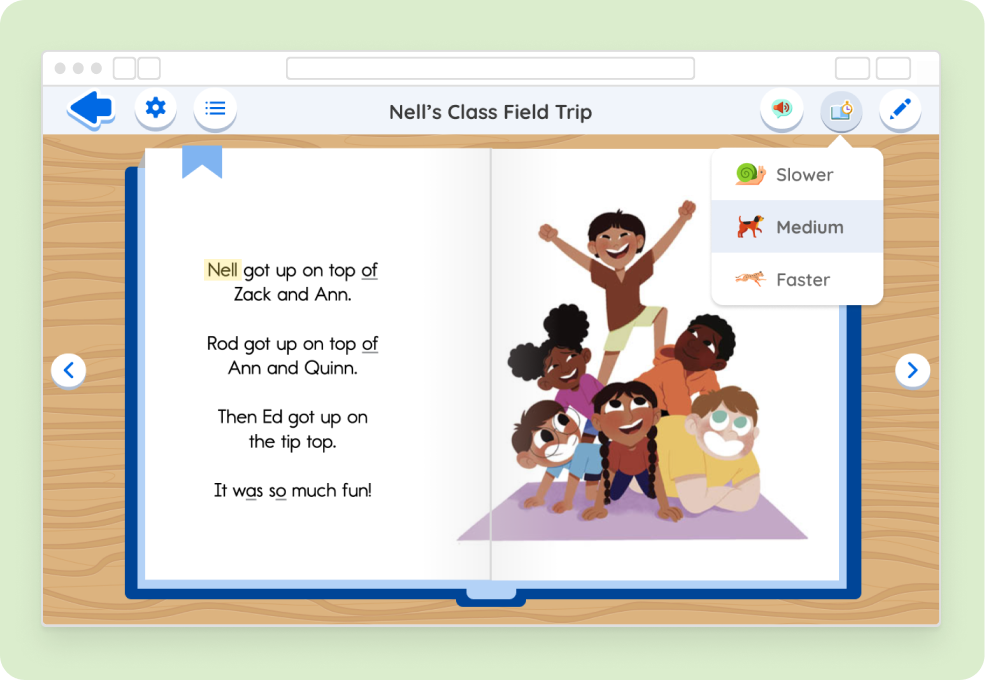
Enhanced Text-to-Speech Experience
An improved text-to-speech experience was one of the major requests teachers had during testing. This feature improvement was ultimately implemented by my client (to an existing product).
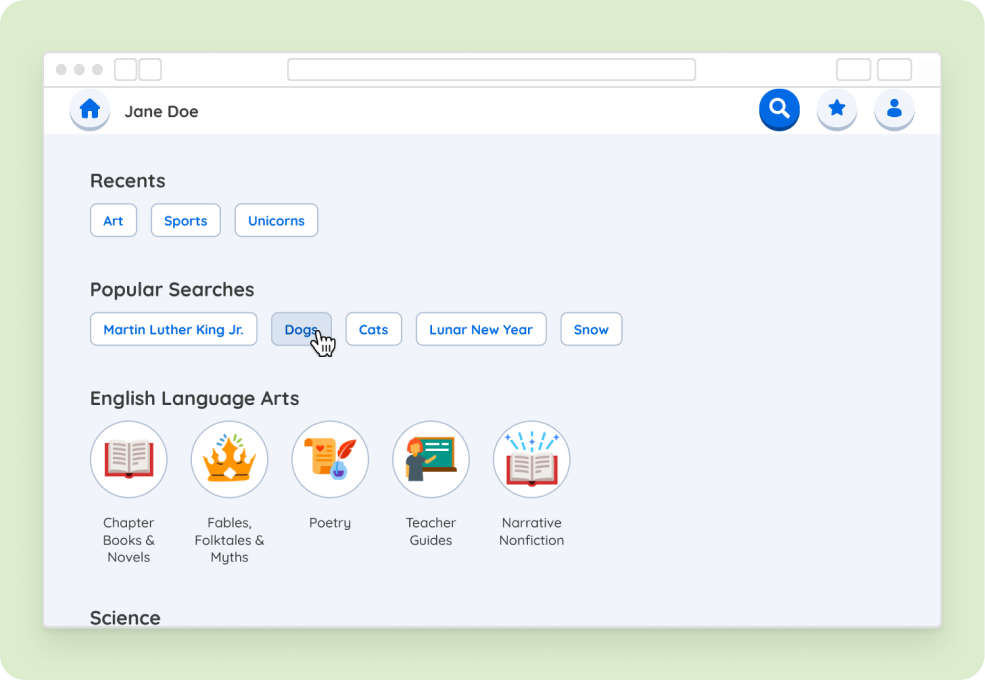
Improved “Search” Experience for young students
To be inclusive of younger students who couldn’t type in a search bar, I designed a “Search” page that instead relied on visuals and keyword buttons.
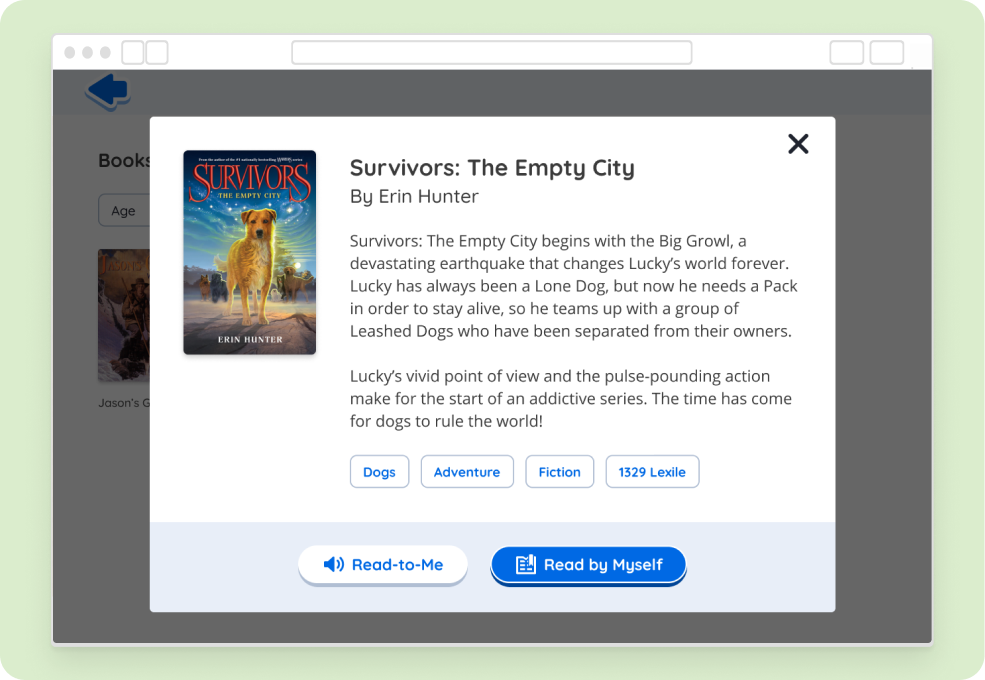
Book Preview
Students expressed wanting an easier way to preview books before deciding whether to read.
Final Results & Learnings
💡 Key Takeaways
Designing for strategic planning can be satisfying in its own way, even if full designs may not always get shipped all at once.
A strong partnership between design and research teams is crucial for designing products that users actually want.
More Projects
Amplify Assign Redesign
I led a design initiative focused on redesigning the digital assignment experience for teachers on an Edtech platform.
Amplify’s “True Blue” Design System
I spearheaded the redesign of K-5 student-facing UI in the Amplify Platform through the co-creation of Amplify’s “True Blue” design system.